Showing posts with label Michael Grandage. Show all posts

Friday, 9 February 2007

Gone West

Gone West

9 February 2007

The Sheffield Crucible's refurbishment is no reason to stop thinking big. Theatre should diversify and conquer.


As You Like It
As you liked it, we'll close the theatre ... Eve Best and Lisa Dillon on stage at the Crucible.
 Photograph: Tristram Kenton


Samuel West's production of As You Like It, which opened in Sheffield last night, got a rave review from Michael Billington, which makes it all the more unfortunate that West will shortly be leaving his post as artistic director after just two seasons at Sheffield. Not everyone thought that West - far better known as an actor, with limited directing under his belt and no experience of running a building - was the right man for the task when he was appointed in 2005. But he has proved the doubters wrong. As well as the current As You Like It, highlights include a brave revival of The Romans in Britain and his own performance in a perfectly judged revival of Caryl Churchill's A Number in which he appeared alongside his father, Timothy.
But now West is departing with the expiry of his initial two year contract (which had an option for renewal for a third year) and the reason is the refusal of the Sheffield Theatre's management to allow him to continue producing theatre on the scale that he would have liked while the Crucible main stage is closed for refurbishment from January 2008 until March 2009. West was very keen to take its work out into the city during its closure, create site-specific work and develop co-productions with other theatres.
Money - or rather a lack of it - and concern for the theatre's continued financial security in an uncertain funding climate is certainly at the root of the Sheffield board's reluctance to commit to West's ideas, and Chief executive Angela Galvin says that they thought hard before deciding that ensuring the theatre's own sustainability and providing "headspace" to rethink its future must be priorities over short-term goals.
But other theatres such as the Young Vic have succeeded in multi-tasking and proved that you can build, think and produce on a major scale all at the same time, and the failure to invest in art and not just bricks and mortar is one that Sheffield may come to regret. A theatre is merely a building, but theatre can happen anywhere - as the success of the National Theatre of Scotland, a theatre without walls, has proved. What's more the recent history of capital refurbishments and rebuilds increasingly suggests that it is those organisations which continue to produce during building works who settle back quickest and do best when they finally get back inside a building. It seems curious that Sheffield, which has worked so hard and put so much money into developing new audiences, should risk that pioneering work, although Galvin is at pains to point out that the continued work of the creative development department will ensure this is not the case.
The difficulties faced by Hampstead Theatre and the Unicorn after lengthy closures without significant production activity suggest that not only does the artistic policy lose momentum but that audiences don't just come flocking back when a theatre re-opens its doors. Theatre going is very much a matter of habit and when the habit is broken it is hard to rebuild even in a city such as Sheffield where the Crucible is the only producing theatre and faces no competition.
Until the arrival of Michael Grandage at Sheffield, the Crucible was a regional rep down on its knees. He and his successor, West, have cultivated a culture that has mixed glamour and risk-taking and put Sheffield on the theatrical map. Relations between West and the theatre apparently remain strong, and he may return as an artistic associate in the future. In the meantime the theatre will be saving his salary, but the long term cost to its reputation and future success might turn out to be higher than anyone realises.

Thursday, 21 December 2006

Samuel West Resigns as Sheffield Artistic Director

Samuel West Resigns as Sheffield Artistic Director

Date: 21 December 2006

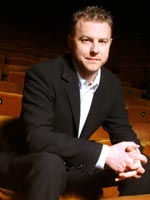
Just two years after succeeding Michael Grandage (See News, 22 Oct 2004), actor-turned-director Samuel West (pictured) is stepping down as artistic director of Sheffield Theatres. He will leave in April at the end of his current 2006/7 season and ahead of a planned 14-month closure of Sheffield Crucible for refurbishment.
A statement released today said that the “decision was reached by mutual consent of both West and Sheffield Theatres Trust” yesterday (20 December 2006) – as the Crucible and Crucible Studio (though not the next door Sheffield Lyceum) will be closed for what would have been a significant portion of the 2007/8 season, “it was agreed that this was a good point to allow West to leave and pursue other projects”. He’s been invited to become an associate artist, as Grandage was before him, and to return to the reopened Crucible stage as an actor or director.

Speaking today, CEO Angela Galvin said: “I’d like to thank Sam for his wonderful generosity, enthusiasm and creativity during the past two years. As an actor, director and colleague Sam has been a real boon to me, to the theatres and to the city.” Chair Paul Allen added: “The sheer quality of acting and production this season has had a consistent excellence which equals anything seen on the Crucible stage in its 35-year history, and anything currently available in British theatre.”

Commenting on his departure, West said: “The Crucible is an incredible theatre. I’ve thoroughly enjoyed my time as artistic director, working with some extraordinarily talented people and getting to know this wonderful city. I wish Angela and the team well with the refurbishment. In the short term, I feel that it’s time for me to explore other creative opportunities.”

West launched his Sheffield tenure with a 2005/6 season that included the first major revival of Howard Brenton’s controversial The Romans in Britain as well as the world premiere of Tanika Gupta’s Gladiator Games (See News, 23 Jun 2005). Highlights to date of the 2006/7 season have included the regional premiere of Caryl Churchill’s A Number, in which West starred with his father Timothy West; a season celebrating Harold Pinter including a production of The Caretaker, starring Nigel Harman, David Bradley and Con O'Neill, that transfers to London in the new year (See News, 15 Dec 2006); and currently, the musical Fiddler on the Roof, starring Henry Goodman.
Still to come (See News, 25 Aug 2006), West will direct Eve Best in As You Like It, running at Sheffield from 7 to 24 February 2007 before moving to Stratford-upon-Avon in March as part of the Royal Shakespeare Company’s year-long Complete Works Festival. West will depart following the season’s final production, Chekhov’s 1904 classic The Cherry Orchard, directed by Jonathan Miller and starring Joanna Lumley as Madame Ranevskaya. It runs from 20 March to 7 April 2007 (previews from 14 March).
The son of actors Timothy West and Prunella Scales, Samuel West’s many acting credits include: on film, Van Helsing, Cambridge Spies, Iris, Howard's End, Notting Hill, Complicity, Carrington, Stuff Upper Lips, Hornblower and Persuasion; and on stage, A Life in the Theatre, Arcadia, Hidden Laughter, The Sea, Mr Cinders, The Importance of Being Earnest, Henry IV and Richard II. For his last London stage appearance, the title role in Steven Pimlott’s 2001 Royal Shakespeare Company production of Hamlet, West won both the Critics’ Circle Award for Best Shakespearean Performance and the Whatsonstage.com Theatregoer’s Choice Award for Best Actor.
Although he has always continued to act, since Hamlet, West has more often concentrated his stage efforts on directing. Prior to Sheffield, his directorial debut came in 2002 with The Lady’s Not for Burning at Chichester Festival, which was followed by Les Liaisons Dangereuses (Bristol Old Vic), an Olivier-nominated English National Opera production of Cosi Fan Tutte (Barbican) and the world premiere of Three Women and a Piano Tuner at Chichester and London’s Hampstead Theatre.
A Sheffield Theatres spokesperson told Whatsonstage.com that there are no immediate plans to advertise the artistic director vacancy, though West’s successor will be in place well ahead of the Crucible’s reopening, scheduled for March 2009. Following West’s departure and ahead of the theatre’s closure, one further main-house production is planned for autumn 2007 and will be announced in the new year.
- by Terri Paddock

Samuel West Resigns as Sheffield Artistic Director

Samuel West Resigns as Sheffield Artistic Director

Date: 21 December 2006

Just two years after succeeding Michael Grandage (See News, 22 Oct 2004), actor-turned-director Samuel West (pictured) is stepping down as artistic director of Sheffield Theatres. He will leave in April at the end of his current 2006/7 season and ahead of a planned 14-month closure of Sheffield Crucible for refurbishment.
A statement released today said that the “decision was reached by mutual consent of both West and Sheffield Theatres Trust” yesterday (20 December 2006) – as the Crucible and Crucible Studio (though not the next door Sheffield Lyceum) will be closed for what would have been a significant portion of the 2007/8 season, “it was agreed that this was a good point to allow West to leave and pursue other projects”. He’s been invited to become an associate artist, as Grandage was before him, and to return to the reopened Crucible stage as an actor or director.

Speaking today, CEO Angela Galvin said: “I’d like to thank Sam for his wonderful generosity, enthusiasm and creativity during the past two years. As an actor, director and colleague Sam has been a real boon to me, to the theatres and to the city.” Chair Paul Allen added: “The sheer quality of acting and production this season has had a consistent excellence which equals anything seen on the Crucible stage in its 35-year history, and anything currently available in British theatre.”

Commenting on his departure, West said: “The Crucible is an incredible theatre. I’ve thoroughly enjoyed my time as artistic director, working with some extraordinarily talented people and getting to know this wonderful city. I wish Angela and the team well with the refurbishment. In the short term, I feel that it’s time for me to explore other creative opportunities.”

West launched his Sheffield tenure with a 2005/6 season that included the first major revival of Howard Brenton’s controversial The Romans in Britain as well as the world premiere of Tanika Gupta’s Gladiator Games (See News, 23 Jun 2005). Highlights to date of the 2006/7 season have included the regional premiere of Caryl Churchill’s A Number, in which West starred with his father Timothy West; a season celebrating Harold Pinter including a production of The Caretaker, starring Nigel Harman, David Bradley and Con O'Neill, that transfers to London in the new year (See News, 15 Dec 2006); and currently, the musical Fiddler on the Roof, starring Henry Goodman.
Still to come (See News, 25 Aug 2006), West will direct Eve Best in As You Like It, running at Sheffield from 7 to 24 February 2007 before moving to Stratford-upon-Avon in March as part of the Royal Shakespeare Company’s year-long Complete Works Festival. West will depart following the season’s final production, Chekhov’s 1904 classic The Cherry Orchard, directed by Jonathan Miller and starring Joanna Lumley as Madame Ranevskaya. It runs from 20 March to 7 April 2007 (previews from 14 March).
The son of actors Timothy West and Prunella Scales, Samuel West’s many acting credits include: on film, Van Helsing, Cambridge Spies, Iris, Howard's End, Notting Hill, Complicity, Carrington, Stuff Upper Lips, Hornblower and Persuasion; and on stage, A Life in the Theatre, Arcadia, Hidden Laughter, The Sea, Mr Cinders, The Importance of Being Earnest, Henry IV and Richard II. For his last London stage appearance, the title role in Steven Pimlott’s 2001 Royal Shakespeare Company production of Hamlet, West won both the Critics’ Circle Award for Best Shakespearean Performance and the Whatsonstage.com Theatregoer’s Choice Award for Best Actor.
Although he has always continued to act, since Hamlet, West has more often concentrated his stage efforts on directing. Prior to Sheffield, his directorial debut came in 2002 with The Lady’s Not for Burning at Chichester Festival, which was followed by Les Liaisons Dangereuses (Bristol Old Vic), an Olivier-nominated English National Opera production of Cosi Fan Tutte (Barbican) and the world premiere of Three Women and a Piano Tuner at Chichester and London’s Hampstead Theatre.
A Sheffield Theatres spokesperson told Whatsonstage.com that there are no immediate plans to advertise the artistic director vacancy, though West’s successor will be in place well ahead of the Crucible’s reopening, scheduled for March 2009. Following West’s departure and ahead of the theatre’s closure, one further main-house production is planned for autumn 2007 and will be announced in the new year.
- by Terri Paddock

Whats On Stage - West Resigns As Sheffield Artistic Director